Valley beater for pulp testing
Valley Laboratory Beater
The Valley Laboratory Beater is a precision instrument for refining pulp in laboratory settings.
About Us
Valley Laboratory Beater
The Valley Laboratory Beater is a precision instrument designed for the preparation and treatment of paper pulp in laboratory environments. Unlike industrial refining systems, the Valley Beater offers controlled beating and refining at a small scale, making it ideal for research, quality testing, and educational purposes. Its design ensures reproducible results that reflect real-world papermaking processes.
Also known as a lab Valley beater or paper pulp beater, this instrument provides researchers and quality engineers with a reliable method of evaluating pulp properties, fiber development, and sheet formation.
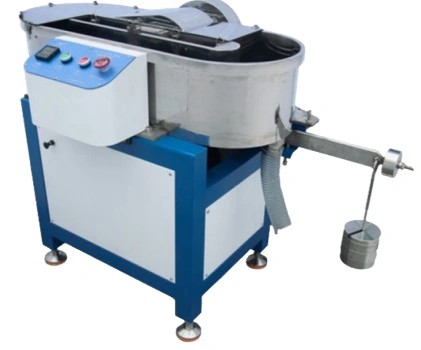
Working Principle of the Valley Laboratory Beater
The Valley Laboratory Beater works on the principle of mechanical refining of pulp fibers through compression and shear forces. A rotating roll and a stationary bedplate create a controlled beating zone where pulp fibers are repeatedly squeezed, cut, and fibrillated.
Fibers are pressed between the roll and bedplate, reducing wall thickness and increasing flexibility.
Compression
The relative motion of the blades causes internal and external fibrillation, creating more bonding surfaces.
Shearing
Beating increases fiber swelling and surface area, improving bonding ability.
Hydration and Fiber Development
Standards and Compliance
The Valley Laboratory Beater is manufactured in accordance with internationally recognized standards:
- TAPPI T200 – Laboratory beating of pulp
- ISO 5264 – Pulp beating equipment and test methods
Compliance with these standards guarantees accurate, repeatable results, and ensures compatibility with global pulp and paper testing requirements.
Industries and Applications
Widely adopted across industries, the Valley Beater and comparable devices like the Hollander Beater.
01
Paper and Packaging Industry
For pulp quality evaluation, refining optimization, and ensuring consistent paper performance.
02
Research Institutes
To study fiber properties and simulate industrial refining on a laboratory scale.
03
Quality Control Labs
For routine pulp testing, refining degree analysis, and compliance with standards.
04
Specialty Paper Production
In the development of filter paper, tissue, and technical papers requiring precise fiber treatment.
Laboratory Beater Instrument
Importance of Pulp Testing
Pulp testing using instruments like the Valley Laboratory Beater and other pulp testing instruments is critical.
Impact on Fiber Bonding
Proper beating directly affects fiber bonding, which plays a decisive role in determining paper strength, porosity, formation, and surface quality. Balanced refining ensures better inter-fiber adhesion and overall sheet integrity.
Optimization of Raw Material Usage
Controlled pulp refining enables manufacturers to make the most of raw materials, reduce waste, and customize paper properties for specific applications. This improves efficiency while enhancing product performance across different paper grades.
Benefits of Laboratory-Scale Testing
Testing on a laboratory scale helps minimize risks and costs by simulating refining effects before moving to industrial production. It provides reliable data, supports process optimization, and ensures consistent quality control.
Our Services and Advantages
01
When choosing our Valley Laboratory Beater, you benefit from:
- High Accuracy & Stability – Designed for consistent beating results in compliance with TAPPI and ISO standards.
- User-Friendly Operation – Easy adjustments for beating time and load, ensuring flexibility for different pulp types.
- Technical Support – Expert guidance on testing procedures, standard compliance, and data interpretation.
- Customization – Options to adapt the beater for specific pulp research needs.
- Global Service – We provide installation, training, and after-sales support worldwide.
A lab valley beater is a precision instrument used for refining pulp under controlled laboratory conditions.
– CELL INSTRUMENTS
Frequently Asked Questions
Q1: What is the difference between a Hollander Beater and a Valley Beater? main purpose of a smoothness test?
A Hollander Beater is an older, traditional design used in papermaking workshops, while the Valley Beater is a standardized laboratory instrument designed for controlled pulp testing according to TAPPI and ISO standards.
Q2: Can the Valley Laboratory Beater be used with recycled pulp?
Yes. It can test virgin, recycled, and mixed pulps to evaluate their suitability for various paper products.
Q3: How much pulp is required for a single test?
Typically, a Valley Beater test requires around 360 grams of oven-dry pulp, but this can vary depending on the test standard.
Q4: Is the Valley Beater difficult to maintain?
No. Regular cleaning and inspection of the beater blades and chamber are sufficient. Our service team also provides maintenance support.
Q5: Do you provide training for new users?
Yes. We offer on-site and online training to ensure operators can perform tests correctly and confidently.


Get in touch
No. 5577 Gongyebei Rd, Licheng, Jinan, 250109, Shandong, P.R.C.
trade@celtec.cn
+86 185 6001 3985
 EN
EN  AR
AR  BG
BG  CS
CS  DA
DA  DE
DE  EL
EL  ES
ES  ET
ET  FI
FI  FR
FR  HU
HU  ID
ID  IT
IT  JA
JA  KO
KO  LT
LT  LV
LV  NB
NB  NL
NL  PL
PL  PT
PT  RO
RO  RU
RU  SK
SK  SL
SL  SV
SV  TR
TR  UK
UK