
In the world of corrugated boxes, quality control is essential to ensure that packaging materials can withstand various stresses during transportation and storage. One of the primary factors affecting the strength and durability of paper products, including corrugated boxes, is the quality of the pulp used to make them. The Valley Beater, in conjunction with standards like TAPPI T200, is crucial in evaluating the quality of the pulp and determining the appropriate refining treatment. This article will explore how the Valley Beater functions, how it aligns with TAPPI T200 standards, and why it is an essential tool for quality control in paper and packaging manufacturing.
What is the Valley Beater and How Does It Work?
إن Valley Beater is a piece of paper testing equipment used to simulate the refining process that pulp undergoes during paper production. It subjects the pulp to controlled mechanical treatment by beating it between two surfaces: the roll bars and the bedplate. This process allows manufacturers to evaluate the beating degree, which directly correlates with the pulp’s properties, such as its fiber length, strength, and ability to form paper sheets.
During the beating process, a measured amount of pulp with a specified stock concentration is treated. As the pulp undergoes mechanical beating, samples are withdrawn at regular intervals to evaluate their progress. The result is a beater curve that shows the relationship between the time of treatment and the quality of the pulp.
This process is crucial for testing corrugated boxes because the pulp’s properties significantly affect the overall strength, rigidity, and performance of the final product. By assessing the quality of the pulp, manufacturers can make informed decisions about the refining process and ensure that the corrugated boxes meet necessary quality standards.
TAPPI T200: The Standard for Paper Testing
TAPPI T200 is an industry-standard procedure used to define the papermaking quality of pulp. It provides guidelines for pulp testing in laboratory settings, such as the use of the Valley Beater. According to TAPPI T200, the Valley Beater method helps to assess the refining degree of pulp by subjecting it to mechanical beating. This method is used to evaluate a wide range of pulps, offering insights into their properties and how they behave during the paper production process.
By following TAPPI T200, manufacturers can ensure that their pulp and subsequent paper products, such as corrugated boxes, meet the necessary performance standards.
Significance of the Valley Beater in Testing Corrugated Boxes
إن Valley Beater is essential for evaluating the properties of pulps used in corrugated boxes. The pulp’s beating degree directly influences the performance of the corrugated boxes during the manufacturing and shipping process. If the pulp is not properly refined, it can lead to weak, flimsy packaging that is prone to damage during handling and transportation.
By using the Valley Beater to assess the pulp quality, manufacturers can fine-tune their refining process to create stronger and more durable corrugated boxes. The ability to control the beating degree helps ensure that the final product maintains the desired level of stiffness, burst strength, and overall durability.
Applications of the Valley Beater in the Packaging Industry
In the packaging industry, particularly in the production of corrugated boxes, it is crucial to test the pulp quality before moving on to the production of the packaging material. The Valley Beater plays a key role in the following areas:
- Product Quality Control: By regularly testing pulp quality with the Valley Beater, manufacturers can maintain consistent product quality and meet industry standards for corrugated boxes.
- Refining Process Optimization: The Valley Beater allows manufacturers to adjust their refining process based on real-time feedback, ensuring that the pulp reaches the desired quality before it is used in production.
- Research and Development: The Valley Beater is also used in research and development to test new types of pulp and refine existing processes. It helps in evaluating new fibers and mixtures to develop innovative packaging solutions for corrugated boxes.
- Improved Product Durability: By ensuring that the pulp is properly refined, manufacturers can produce corrugated boxes that are stronger, more resilient, and less likely to fail under pressure.
Cell Instruments Valley Beater: A Reliable Solution
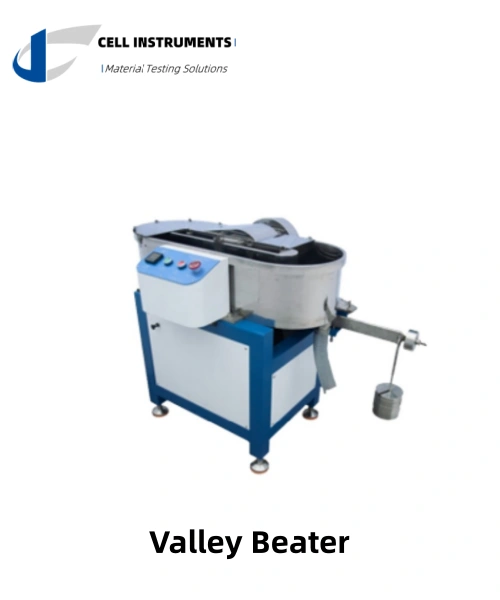
إن Cell Instruments Valley Beater is designed to provide accurate, consistent results for pulp testing in line with TAPPI T200 standards. It offers precise control over the beating process and enables manufacturers to obtain detailed information about the pulp’s beating degree and quality. By using the Valley Beater, manufacturers can ensure that their corrugated boxes meet the required strength and durability standards.
Features of the Cell Instruments Valley Beater:
- Precise Control: Offers fine control over the beating process, allowing for accurate and consistent results.
- Efficient Testing: Streamlined operation for faster, more efficient pulp testing.
- TAPPI T200 Compliance: Fully compliant with TAPPI T200 standards, ensuring that your tests are reliable and meet industry benchmarks.
- Durability: Built for long-term use, offering high reliability and performance for packaging manufacturers.
Conclusion
إن Valley Beater is an essential tool for evaluating the quality of pulps used in corrugated boxes. By adhering to TAPPI T200 standards, manufacturers can ensure that their pulp is properly refined, leading to stronger, more durable packaging materials. Using the Valley Beater helps optimize the refining process, improve product quality, and reduce the risk of product damage during transport. Whether for product quality control or research and development, the Valley Beater is a crucial piece of paper testing equipment in the packaging industry.
 AR
AR  EN
EN  BG
BG  CS
CS  DA
DA  DE
DE  EL
EL  ES
ES  ET
ET  FI
FI  FR
FR  HU
HU  ID
ID  IT
IT  JA
JA  KO
KO  LT
LT  LV
LV  NB
NB  NL
NL  PL
PL  PT
PT  RO
RO  RU
RU  SK
SK  SL
SL  SV
SV  TR
TR  UK
UK